"Fire is life itself" – an interview with anthropologist Rane Willerslev
The article is from Morsø Magasinet 2026
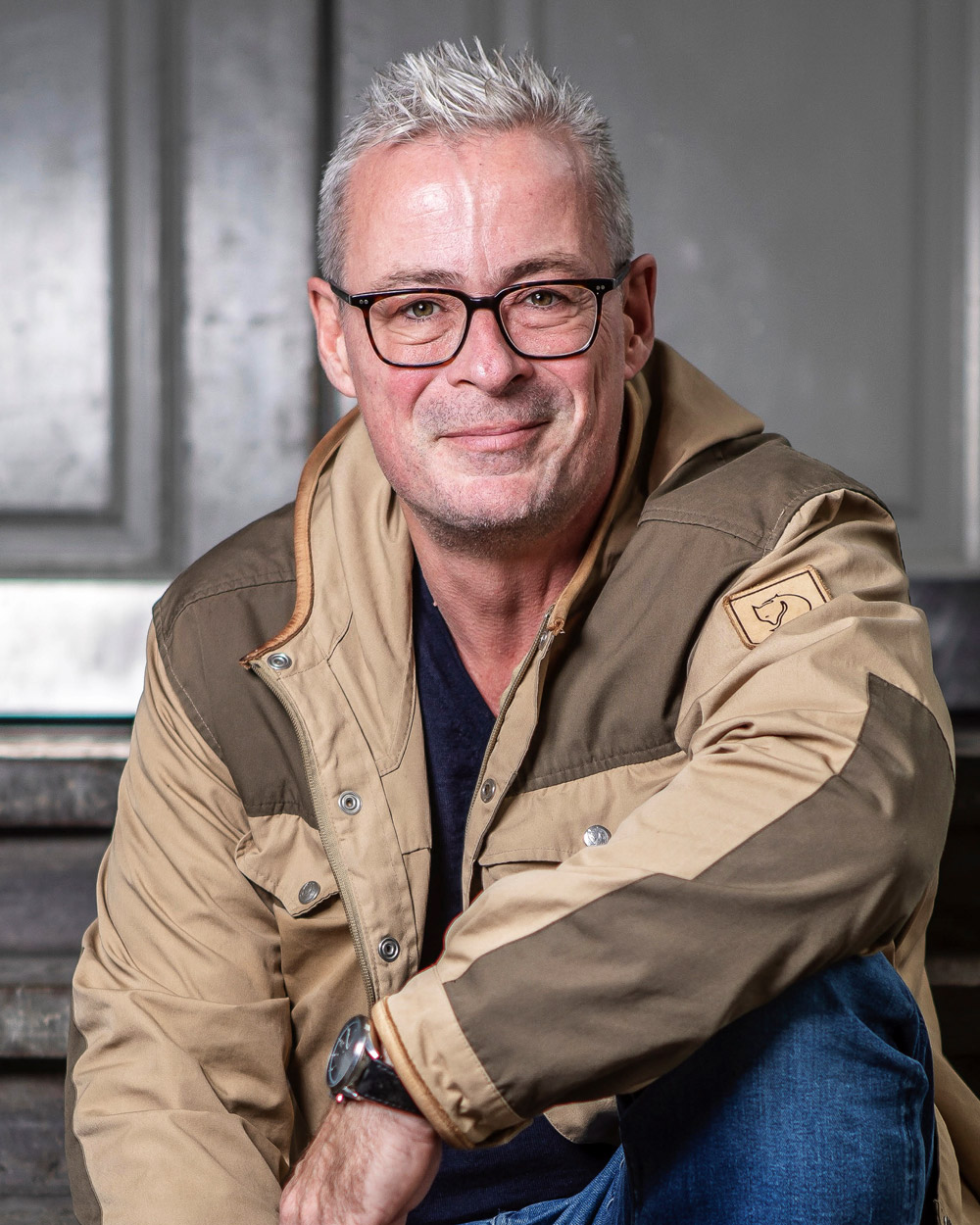
At Morsø, fire has always been a natural focal point – in our designs, our sense of who we are and the way we express ourselves. It’s also at the heart of how we create spaces. So it feels fitting that, on a slightly dark Wednesday afternoon in Copenhagen, we’ve arranged to meet with Rane Willerslev – professor of social anthropology and director of the National Museum of Denmark – to talk about fire. Specifically, about what fire means, and has meant, to humans, both practically and culturally.
Can you really talk about fire like that?
“You absolutely can. Fire sits between the sacred and the very down-to-earth. That’s what makes it so remarkable.”
Rane answers with his characteristic enthusiasm as he settles into his chair. It’s obvious that fire has a special place in his own life, both in the sacred sense and the everyday one. We start with the practical.
“Fire is the reason we developed as Homo sapiens at all. We don’t actually know for sure when we first started to control fire and use it, but most likely sometime within the last two million years. Our species, Homo sapiens sapiens, is only 250-300,000 years old. Before that, there were different hominids.”
We rewind to the very beginning, via the story of how we split from the apes around six million years ago, when drought shrank the forests that once covered all of Africa. Some of our ancestors moved out onto the savannah, while the ancestors of today’s chimpanzees stayed in the forest. Rane tells it in the kind of short, sharp summary only he can give.
“So they move out onto the savannah. Then, one to two million years ago, you get Homo erectus, the upright human. That’s the one that looks most like us. Erectus had a brain twice the size of a chimpanzee’s. And that’s to do with fire, because they were able to control it. They could almost certainly make fire too – it’s not just a question of lightning striking and doing the job for them.
“And why is that so important? Because fire breaks down the fibres in food, so it’s easier for us to absorb the energy. A chimpanzee spends 30% more time chewing its food than we do. And that meant our intestines shrank. We used to have even longer intestines because the food had to pass through a much larger digestive system. The surplus energy goes to the brain, which allows us to develop these huge brains.”
So our development into who we are today is, in a way, a story about nutrition?
“Yes. And that’s where fire’s crucial! Our brains are three or four times larger than those of Homo erectus. So what happened is that we sent even more energy to the brain. Our jaws got smaller, our intestines got smaller, our teeth got smaller, because we didn’t have to chew as much. If we hadn’t had fire, we wouldn’t be who we are – we simply wouldn’t be human. We wouldn’t have these brains without fire.”
We stay with the down-to-earth side of things a bit longer. The destructive power of fire – which breaks down the fibres in our food but also fuels our development as a species – plays the same double role in nature, reshaping the landscape around us.
“And that’s actually a really important point. Fire is the first way we change the landscape. People tend to think hunter-gatherers run around in untouched wilderness, and only when agriculture comes along do we start transforming things. That’s completely wrong. Hunter-gatherers have always reshaped the landscape using fire – I’ve lived with them myself in Africa. They burn off the grasses in the dry season, so that new shoots come up and the animals follow. Fire creates a symbiosis between humans and animals: the animals get food, and in return the hunters can take some of them and eat too.”
We talk about the paradox that settlers and cowboys in the United States described the prairie as “pristine” or untouched – when in reality every landscape they encountered had already been shaped by deliberate burning by Native Americans.
“So it wasn’t an untouched landscape. And fire also transforms landscapes on its own. When lightning strikes and forest fires start, that’s actually a good thing, because the weaker trees die and the ones that survive are hardened. The ash becomes fertile ground for new vegetation and forest. So fire is something that consumes and destroys, but at the same time, it’s a precondition for life. It destroys things, takes life – and creates life. And that’s what makes fire sacred.”
It’s simple, beautiful and natural. The bridge to the sacred, the mystical and the spiritual lies in that very practical role fire has played in life and death throughout human history. That’s also our bridge into some of Rane’s own experiences with the sacred side of fire among the Chukchi people in Siberia.
“In other cultures, fire is deeply sacred. Among the people I worked with in Siberia, you make an offering every time you arrive somewhere new. You feed the fire with a bit of tobacco, some sugar, a little tea and a splash of spirits that go whoomph when you throw it in. You do that because these are luxury items – things the spirits of the forest don’t have. They’ve got plenty of meat and so on, but not those things. When the fire consumes them, they’re gathered up on the other side. It’s a very widespread religious worldview: when something is sacrificed, it has to be destroyed by fire and then it’s reassembled on the other side. If you sacrifice something that isn’t destroyed, it’ll be destroyed on the other side – and vice versa.”
So the fire spreads these gifts through its smoke, out into the landscape, where all the spirits get what they need. That also applies to the spirit of the fire itself, which, according to Rane, you can sometimes glimpse in the shape of a bald child dancing in the flames, if you stare at the fire long enough.
“I’ll admit, I’ve sat and stared – but I haven’t seen it. And I’ve spent a lot of time looking into fires. I’ve seen all sorts of things, but not that.”
After a small pause, Rane remembers something he has actually seen.
“I did see someone once, but he wasn’t bald. It was more like an elf. It was in Siberia, and I was trying to light the fire in a sauna. Every time I struck a match, it blew out. I kept trying. And then I look over – and there’s this little man running into a crack in the wall. I mean, I don’t know what it was, but someone was definitely blowing.”
He was teasing you?
“He was teasing me, yes. So then you have to hurry up and give him something. A little gift. I don’t know if it was the spirit of the fire, but it was definitely a little guy.”
Seeing is one thing, hearing is another. For the Chukchi people in Siberia, the sound of the fire also has several roles – and they’re the people among whom Rane formed much of his spiritual relationship to fire.
“They also interpret the sounds of the fire when something explodes – those little pockets of gas in the wood. And I have to say: that one’s spot on. When you hear that sound, it means something’s happening. Either someone’s coming, and depending on the kind of sound, it can be something dangerous or something pleasant. You’re constantly interpreting. The fire speaks. And that’s really the key: fire both listens and speaks. You interact with it in the same way. You talk to it, you make offerings and ask it for things – and it speaks back.”
So fire is sacred. And that’s something Rane has carried with him. We’re quietly delighted to hear that he has a wood-burning stove in his summer house in Sweden, another in his summer place in North Zealand, and one at home in Copenhagen.
“And as I tell my kids and my wife: you must never throw rubbish into the fire. Because fire is sacred. It’s not a dustbin. Not even the tiniest bit of rubbish should go in there. Quite the opposite. Once in a while you should give it something to eat – an offering.”
So you do that?
“I do! Absolutely I do! You just say: ‘This is yours,’ and then you throw it in and bow your head. It doesn’t have to be more than that. But yes, I’m influenced by all of that.”
Even if offerings aren’t something we, as a company, build into our design process or marketing, we’re very much on board with his rule about never throwing rubbish into the stove. At Morsø, we burn clean. And that brings the conversation back to the more practical side, as we talk about the development from open hearths to wood-burning stoves – and the crucial role of cast iron.
“Right up to the Viking Age, it’s open fires. Open hearths in longhouses and tents. In the Middle Ages you get the big open oven where you can cook, but an open hearth isn’t especially warm. What makes wood-burning stoves fantastic is the cast iron, which radiates heat into the whole room. So cast iron is crucial. When I was a fur hunter in Siberia, we lived in tents and log cabins at minus 65 degrees, and we had stoves made from old oil drums. Just thin metal. They get super-hot. The moment you light them, you can sit in shirt sleeves inside the tent, even though it’s minus 65 outside. But the moment the fire goes out – bang – it’s freezing. A cast-iron stove is completely different. A fantastic invention.”
For Rane and the reindeer herders he lived with in Siberia, fire meant survival. But what about the role of fire, the fireplace or the wood-burning stove in Denmark today – when our lives no longer depend on it in the same way? And yet… maybe they still do.
“Yes, that’s true. But it’s quite funny, because I keep waiting for some kind of law to ban wood-burning stoves. It’s getting closer and closer. I just don’t think they’ll ever get it through. And that’s interesting, because although we’ve stripped the sacredness of fire out of our culture, it’s still sacred to us. The wood-burning stove is sacred to us.
“And research actually shows that people live longer if they listen to crackling fires, wind in the trees and running water. Isn’t that interesting? But it’s because humans and fire go hand in hand. As I said: we only became human because we learned to make fire. That means we’re built for it. It’s part of our DNA. It gives us a deep sense of calm and safety that’s ancient – from back when we walked the savannah. That’s why the sacredness is still in us. We just don’t have words for it anymore, and we don’t ritualise it.”
And then there’s something else: community…
“Exactly. Fire has always been a gathering point. People sat around the fire, partly because that’s where the food was cooked, and partly because it meant safety. It wasn’t that long ago that we were prey for other animals. So the worst thing you can do is to say that someone isn’t allowed to sit by the fire. That’s the ultimate exclusion. Then you’re banished.”
We end where we began – with the wonder of fire as both sacred and utterly practical. And it’s here, as we round off, that Rane gives us his closing “fireside speech” on behalf of this remarkable element. We’ll let him have the last word.
“You can, of course, try to reduce fire to a purely scientific explanation. There’s friction, and then there’s a spark, and so on. And it’s not that this explanation is wrong. But if we’re being completely honest, we have to acknowledge that reality is bigger and richer than what we can describe in scientific terms. The world is much more marvellous than our scientific worldview currently allows.
“And that, to me, is fantastic. Because it opens up a space where we can still be enchanted. We lose that enchantment if we insist that the only things that exist are what we can describe through maths or measurements. That would be totally absurd. If you’re a serious scientist, you know for sure there are lots of things we don’t know and may never know.
“So this idea of letting yourself be amazed, like when you sit and stare into the fire – that’s really a kind of enchantment. You’re allowing the world to enchant you. And we need that. What matters is that through enchantment, we become aware that beauty has value in itself. That the world in all its diversity and beauty has value in and of itself. And fire may be the strongest phenomenon we have to express exactly that. Fire takes life and creates life. It destroys and creates at the same time. It’s marvellous. It’s life itself.”