The Crown with an unbroken tradition – why Morsø keeps its royal symbol after 2030
The article is from Morsø Magasinet 2026
For more than 100 years, a small symbol above the Morsø name has carried a weighty story. The royal crown has followed the brand through war, generations and design eras – and even when the Royal Warrant scheme for suppliers to the Danish Royal Household comes to an end in 2030, Morsø has been granted the exceptional right to keep the little crown in its logo. This is the story of a rare privilege, an unbroken tradition and a royal seal of approval that became part of the brand’s identity.
There are symbols that slip away without drama. And then there are those that remain because they’ve taken on a meaning that reaches far beyond the visual.
For Morsø’s crown, it’s the latter.
For over a century, the crown has been part of the company’s public face, telling a story that isn’t just about design, but about a genuine connection between a foundry on the island of Mors and the Danish Royal Family.
And now, as the Royal Warrant system is being phased out, one thing is clear: Morsø is keeping the crown. It’s a small but important nod to a long and unique history.
A royal seal in wartime
When King Christian X granted Morsø the title of Purveyor to the Royal Danish Court in 1915, the headlines of the day were anything but peaceful. The First World War was driving up raw material prices, and like many other Danish manufacturers, Morsø Jernstøberi had to scale back production. Even so, Morsø received the royal seal – and for good reason.
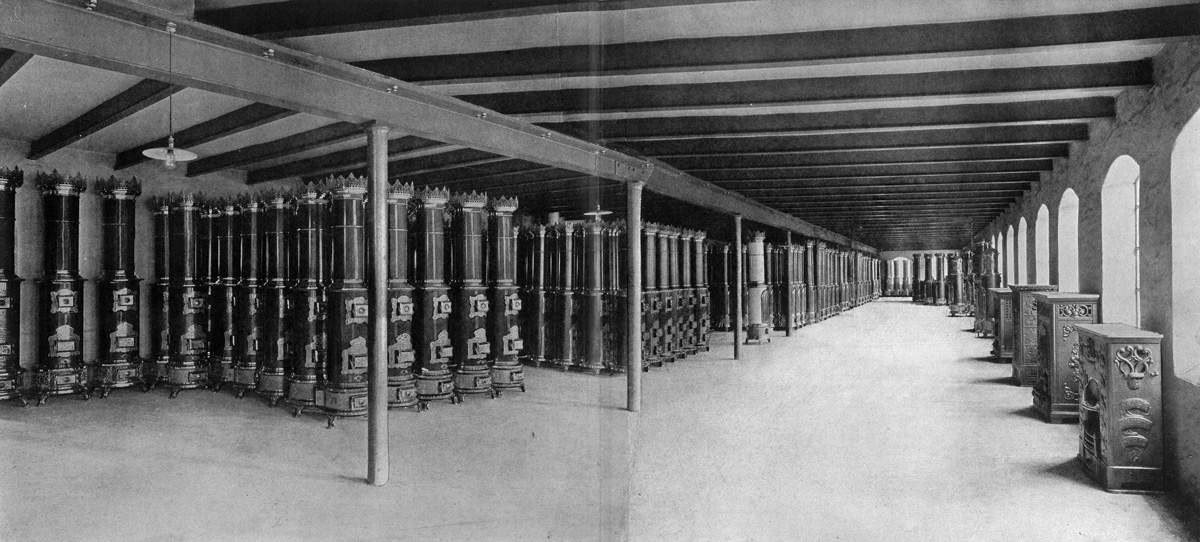
The connection was already there. That same year, Morsø’s local newspaper wrote that the king had ‘on several occasions expressed his particular admiration for the factory’s products,’ and noted that Morsø stoves were in use in Amalienborg and Marselisborg Palaces and the new sum-mer residence in Skagen.
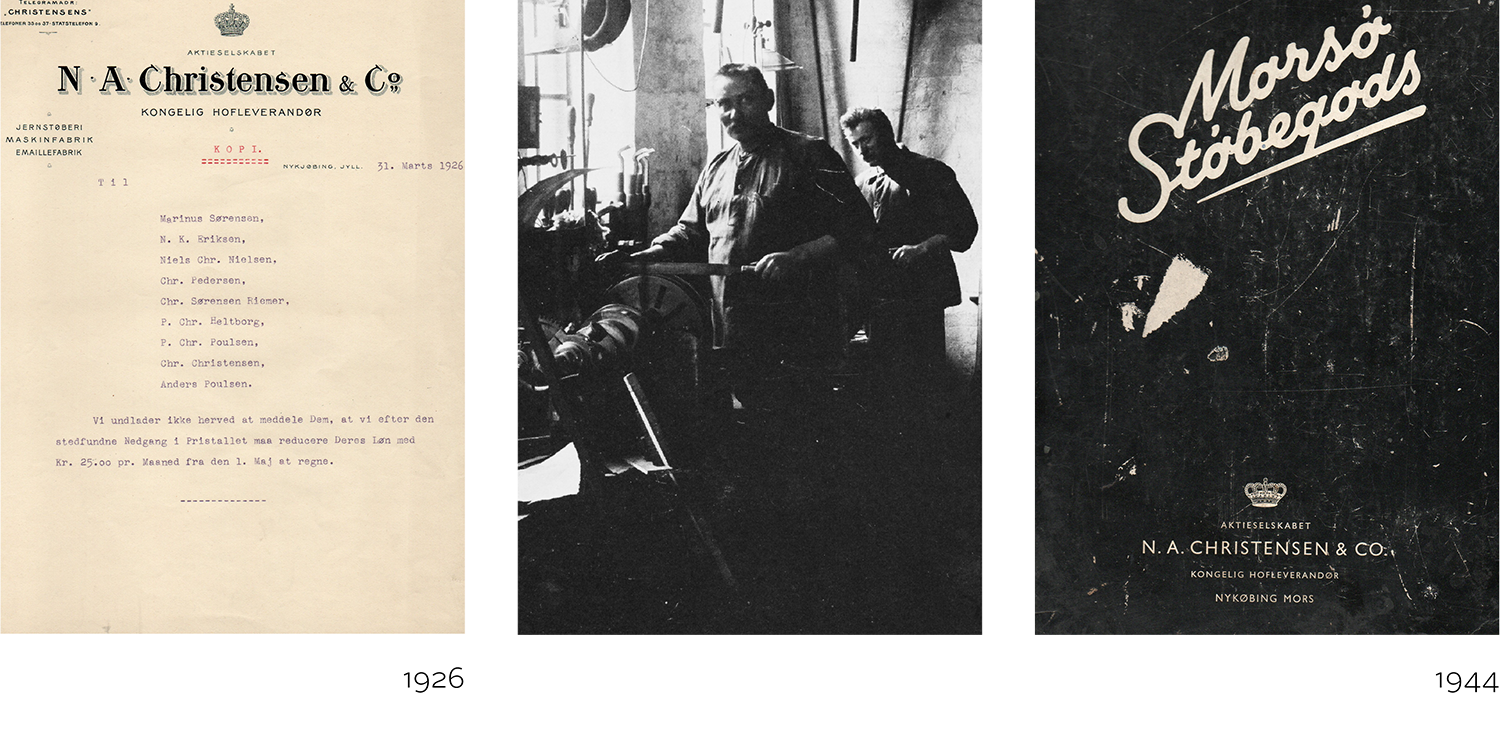
So it was almost inevitable that in 1925, the crown became part of the Morsø logo – a visual bow on a ribbon that was already tightly tied.
Visits, gifts and the small stories that linger
When you dig into Morsø’s history, it’s rarely the big headlines that stand out. More often, it’s the moments when the relationship between Morsø and the Royal House becomes concrete and human.
One such moment came in 1928, when Christian X paid an official visit to Nykøbing Mors. Midway through the formal programme, he specifically requested a tour of the foundry – one he took such an interest in that he later described the company as ‘one of the most important outside Copenhagen’. A remark that says a lot about the status Morsø had already established.
Another moment came in the 1950s, when King Frederik IX visited Nykøbing Mors to mark the town’s 650th anniversary, accompanied by the three young and much-loved princesses Margrethe, Benedikte and Anne-Marie. There wasn’t time for a factory visit, but the town’s official gift was carefully chosen: three small doll-sized cast-iron stoves from Morsø Jernstøberi.
Several decades later, the story took a lovely little twist. For Nykøbing’s 700th anniversary, the now-adult Queen Margrethe and Prince Henrik visited Morsø Jernstøberi’s new premises on Furvej in the northern part of town. In the showroom, the Queen suddenly noticed the tiny stove from her childhood – a piece of cast-iron nostalgia, preserved as part of Morsø’s own story. A quiet but touching moment when a childhood gift again found its place in history.
And when the royal couple passed through Mors again on their summer tour in 2014, the official gift was once more a Morsø product. A Morsø Forno – a symbol of a new chapter that has since had a permanent place on the terrace at Marselisborg Palace.
So even as the Royal Warrant scheme ends, these moments suggest that the story of Morsø’s links with the Royal House is far from over.
A small symbol with long reach
The crown wasn’t just a national badge of honour; it quickly became a powerful credential in export markets too. At a time when Danish design was really beginning to make its mark internationally, the royal crown served as a visual proof of quality, reliability and integrity – values that still underpin Morsø’s brand identity today.
In Morsø’s catalogues through the years, the crown has been a constant presence. From the austere typography of the 1920s, through the more playful and colourful look of the 1970s, right up to today’s pared-back visual universe, it keeps resurfacing as a clear, unbroken line through the company’s history.
When a scheme ends – and something else carries on
The decision to discontinue the Royal Warrant scheme on 31 December 2029 was made because the Royal House wants to modernise and simplify its official relationships. The scheme will be phased out for all Danish companies, regardless of sector or history.
But Morsø is an exception
In 2025, Morsø applied for the right to continue using the royal crown in its logo, even after the title officially lapses. In an extraordinary move, the Danish National Archives approved the request, because the documentation spoke for itself: Morsø has held the Royal Warrant since 1915 and has used the crown in its logo continuously since 1925.
From 1 January 2030, the crown will therefore remain. Not as a formal warrant, but as part of Morsø’s own story and a privilege granted only when history clearly justifies it.
A symbol that points forward
And perhaps that’s the real point. Morsø’s crown isn’t about nostalgia, but continuity. About a line that runs from the first cast-iron stoves to today’s fully fledged lifestyle universe – and on to products that are still on the drawing board.
It tells us that some connections don’t disappear just because a scheme does.
And that a small symbol in a logo can sometimes hold more history than you might think at first glance.
So the crown stays. And the story continues.